Native Garden and Ecolandscaping Resources

Bee on Aster by Katheryn Laible

Recently Updated! A few years ago now, I started reaching out to friends and collecting resources that we are pleased to share with you!

Continue reading

Tales From the Firefly: An Introduction to the Healing Power of Art

I’ve learned a great deal in my experience of The Firefly, much of it to do with the profound healing powers of art. In fact, a lesson in that is precisely how I found this place to begin with. 

Of Elephants, Cows, and Cosmic Moments

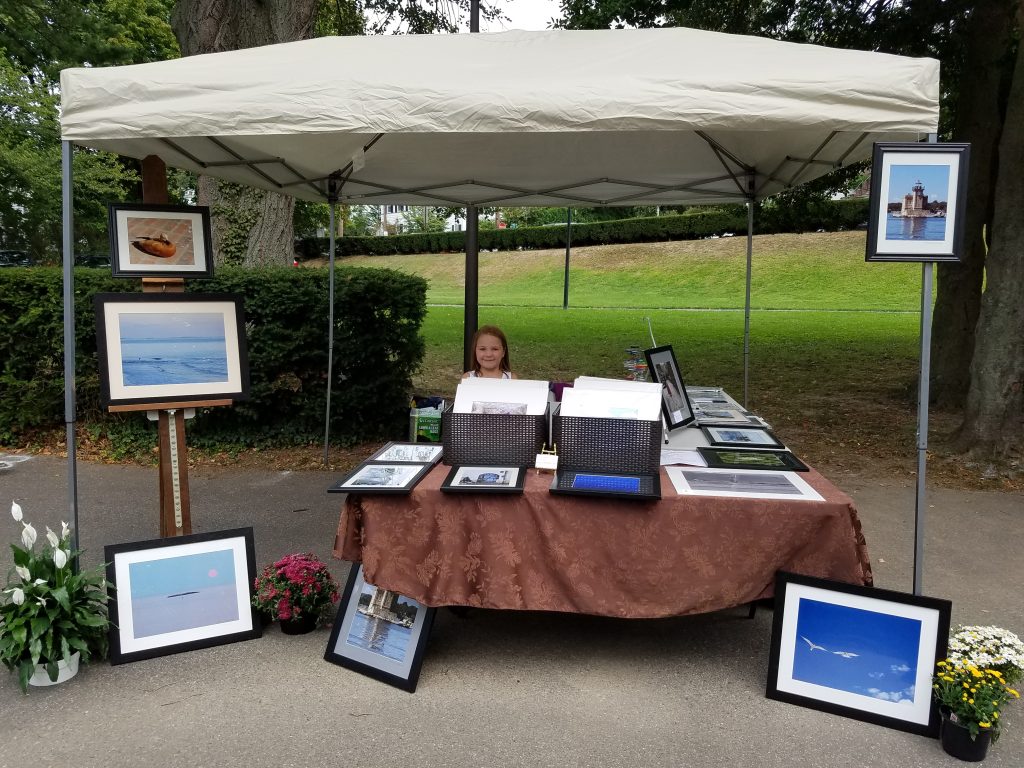
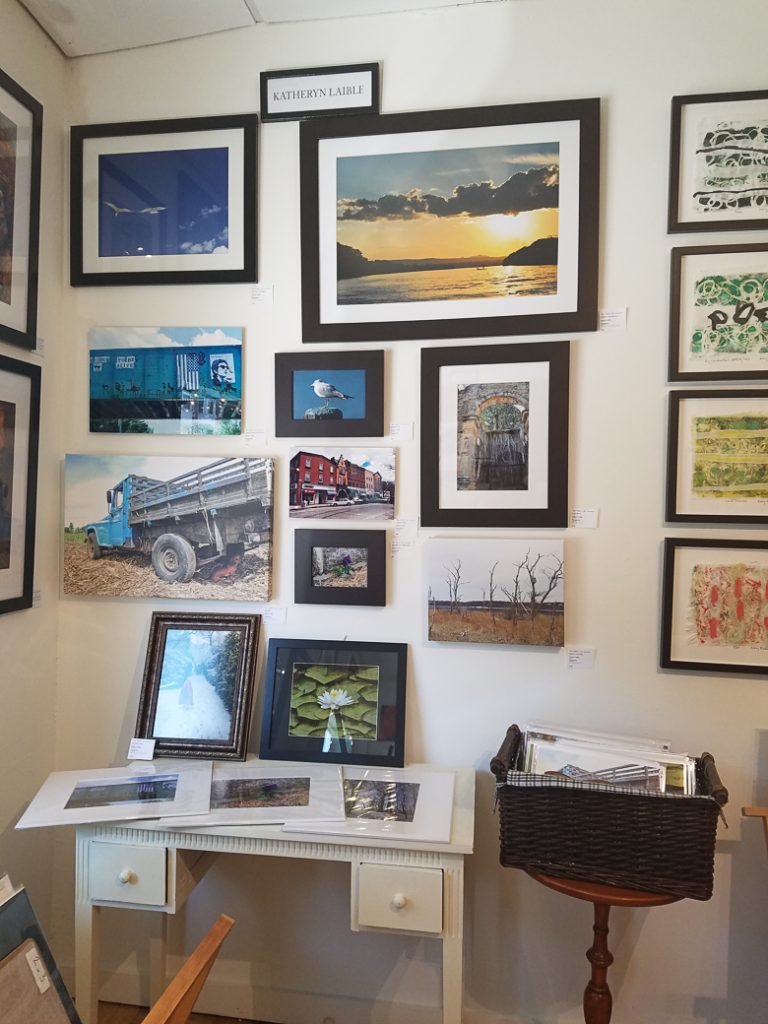
It all started for me in 2016. I was at a major transition point, my mother had recently passed away, and my daughter, Lizzy, wanted to save elephants. I, who had long photo-documented my family, nonprofits and more artistic imagery, had been strongly considering a foray into fine art photography. 

A Cow Harbor Day booth in Northport seemed like a fun way to do both!

Lizzy was a bit young to work, but very capable and at least as interested in how it all operated as she was excited that we were raising money for elephants. With the help of a few friends, we had a wonderful day and got to make a nice donation to the World Wildlife Fund. At the same time, I began to learn what it’s like to be both a professional artist and to run a gallery…training I still had no idea I’d ever use!

She was totally into it. We had so much fun. 

Linda Advised: Art Heals

While I will never forget our opening experience, a woman who fell in love with a snowy Centerport scene and walked away embracing it like some great treasure, my best customer was a woman named Linda, who came toward the end of the day. She told me she worked at The Artisan House up the road. She also told me she’d dealt with ovarian cancer since she was a young woman. 

I’m not sure how old she was at the time, but this had clearly been a decades-long experience for her. Linda shared that she was always “a good girl” and had done everything her doctor told her…and had also tried just about every alternative treatment folks have come up with. After describing more than one trip to death’s door and back, she told me the one thing that she felt saved her from both the disease and its cure was meditating on art. She expressed gratitude that my work was perfect for this and said she wanted to buy a few pieces. 

Enrapt in her story, I was I think startled by her punchline. Deeply humbled and honored, for sure, I just wanted to give them to her as a grateful gift. Linda refused. She insisted artists should be paid.

Then, she said, “You should be a Firefly.”

“What’s that?”

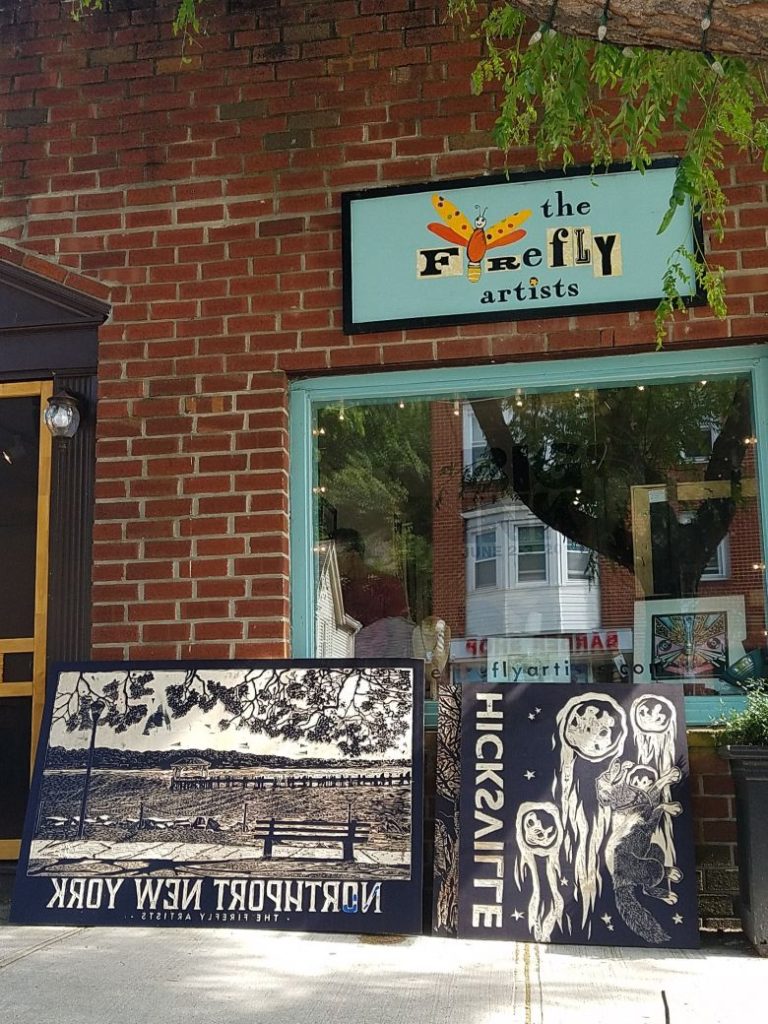
Linda explained that The Firefly was a neighbor business, then located down by the Firehouse on Main Street. She thought we would be a good match. 

Back at the beginning, a few locations ago…

A Spark of Firefly Light

Deeply impressed by the experience, I soon got up my nerve to go in and offer my work to the Firefly. It seemed like a nice place. The art was beautiful, and they were friendly. Still, I had no expectations and had almost forgotten about my application when they gave a call in mid-2017 to invite me in.

It was another deep honor just to be asked. Mildly terrified, I leapt at the opportunity.

I soon realized I had stumbled upon something truly special: A warm, welcoming, highly talented house of local art and artists. The best part was they accepted Lizzy – and the rest of my kids — as one of them fairly immediately. It’s been an honor and a great adventure to serve them ever since.

Thank you, Linda. From the bottom of my heart, thank you. 

Hope you come by to see us sometime.

Applications Open for Devlin Starr Memorial Art Award

A Gift of Space and Encouragement to Create

The Devlin Starr Memorial Art Award, “reflects Devlin’s advocacy of giving people ‘space’ both figuratively and literally to create. He believed that with access to space, materials and people who believed in him, he had the freedom and encouragement to pursue his artistic vision and was able to create his best work.”

Emerging Multimedia Artists aged 18-28 are invited to apply for this $3000 award intended to provide an opportunity to “push artistic limits and expand their body of work.” 

Applications Due By: May 8th
For Guidelines and to Submit: Visit the Huntington Arts Council Website. 
A small event will be held June 25th, highlighting the award recipient and showing a selection of their work. A short feature will also be included in the spring issue of the Huntington Arts Council’s beautiful and informative Arts Cultural Magazine

About Devlin Starr

A beloved son of a beloved member of the Long Island Arts Community, the Huntington Arts Council website will tell you that “Devlin was a multimedia artist, attending the University Of Hartford School Of Art pursuing his BFA in sculpture/minor in chemistry, and member of the HAC family. His art, thought-provoking at times, was a reflection of himself, his desire to understand human nature, and express his feelings. Devlin was most comfortable in nature; exploring the woods, walking the beaches, and hiking. Painter, sculptor, photographer, videographer and musician, Devlin created with anything he could get his hands on. Supporting his peers and encouraging young artists to create, Devlin’s compassion for others defined him.”

Devlin's Light Endures Because of Our Community

That website also reminds us that, “the Devlin Starr Memorial Art Award is funded by the heartfelt, and overwhelming generosity of so many friends, family, colleagues, coworkers, and people who never even met him. Devlin’s artwork was a reflection of who he was, and how he saw the world. This award is a beautiful tribute to his creativity, artistry and kind and gentle soul; always one to put others first. We are so grateful and appreciative for the ongoing outreach and support of our family.”

If you would like to help advance this legacy, please consider donating here

The Bahr Gallery: What A Trip! Have You Been?

Oyster Bay Treasure: The Bahr Gallery

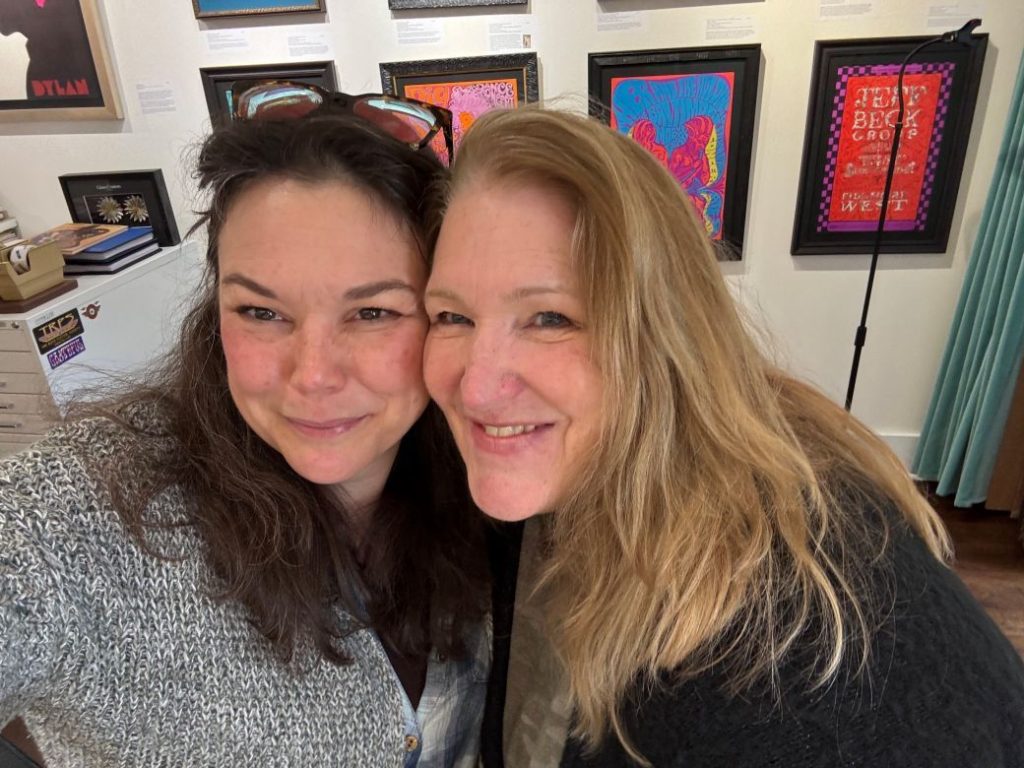
Had a lovely time in Oyster Bay with an old friend. First, we stopped by Sweet Tomato, which is filled with delicious soups and sandwiches. Then, we went right next door to stop in at the captivating Bahr Gallery.

There’s a 6-minute video that tells the story of this place. Suffice it to say, Ted Bahr is a man with a passion that he is delighted to share. Collectors have taken notice, traveling from all over the world over to do just that.

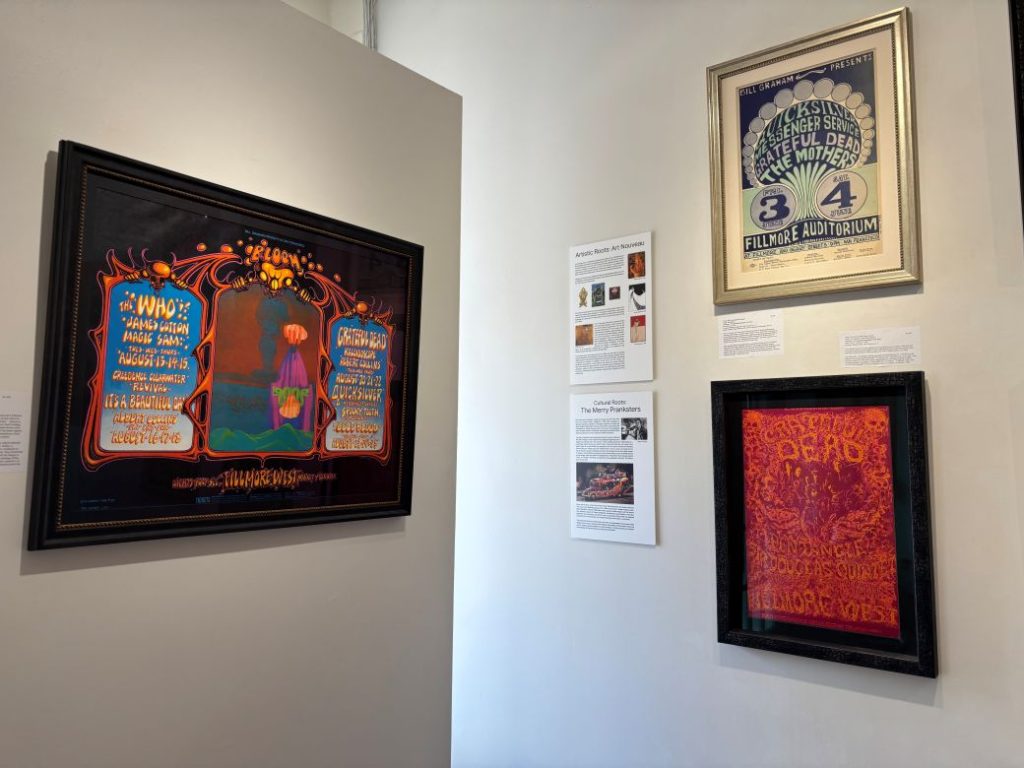
Located in the charming village Oyster Bay, The Bahr Galley is “dedicated to finding good homes for the stunning psychedelic posters of the late 1960’s.” They “specialize in first printings, often signed, of Avalon, Fillmore, and other iconic venue posters which are highly prized by collectors and connoisseurs of the period. Most “are previously authenticated and bought at auction from reliable, reputable vendors who have been in the market for many years.”

There are generally 60-some-odd posters on view. They shift like vibrant, kaleidoscopic, Art Nouveau tides from that golden age of music, rolling in and out as Bahr perpetually curates his evolving collection. More than 300 pieces are fully cataloged and organized by band and category on the website.

They have visited museums and lived in fascinating homes. Here, they await their next residences, while having grand adventures with folks who come to appreciate them. 

It’s quite a trip! Do go see! 

Operating hours vary with the season. Regular events add another layer entertainment and cultural immersion. Private visits may be arranged by e-mailing ted@bahrgallery.com or call 516-283-1967. Let us know how it goes!

It was so much fun to do this with Patti. I love this woman and hadn’t seen her in way too long. She’s a primary reason my son is an Eagle Scout. Her whole family is dear to our hearts, and we are grateful she has continued to guide cubs since our own boys went off to college. In a place where people have worlds of concerns about things we don’t even need to know about, she is a calm, a focus, a gently effervescent, comforting presence. The world is better because she is in it. I am grateful. Thanks! <3

Tales from the Firefly: A Simple Guy. Plus, Find us in Sunday’s Newsday!

We’ve been talking about sharing some of the stories that walk into our gallery and warm our hearts. Figured we’d start with this one…Plus, check out the link below and pick up Sunday’s Newsday for great tips on visiting galleries! 

A Guy Walks into a Gallery

A guy walks in. Looks like maybe he’s in construction, or a dockbuilder…I don’t know…probably works with his hands…

“I’m a simple guy,” he tells me. “Not the kind of guy you’d think belongs in an Art Gallery.”

“I came in here one day, though, and you guys were so nice. And everything was so beautiful. And you made me feel really comfortable and welcome. 

I want you to know, I’ve been to five galleries since. Most of them were okay. The last one, the lady was kind of nasty. But you know what? That was her problem and I knew I belonged. I am now a counnosoire of art. Thank you!”

We looked at some stuff. He offered thoughtful reflections. We had a good time. 

It was great. I’m grateful to whomever welcomed him first. It meant a lot. 

A Guide to Gallery Going: We'll be in the Sunday Newsday!

We are delighted at this great article by Kay Blough in Newsday, “Explore Long Island art galleries like an experienced collector,” featuring our own Drigo Morin and the very awesome Wendy Curtis of the Huntington Art Center. We can’t wait to pick up Sunday’s Newsday where this will be in print. It’s got a great guide for those who’ve never been to galleries before. 

There’s excellent advice from our dear Drigo Morin, as well as an awesome photo of him with one of his refined portraits! The very awesome Wendy Curtis of the Huntington Art Center offers good stuff, too. It’s a great resource!

We hope you come to Northport this weekend. The whole village is an art gallery! Huntington is a fun, cultural treasure as well. Wait ‘til you see what all our Fireflies have in store…Wendy’s gallery is amazing, too! 

Jump right in. The art is fine. 

Detail of Drigo's portrait of the two headed monster.

March in the Garden: Patience, Mindfulness, Joyful Anticipation

Welcome, Spring! It’s good advice to wait until temps are regularly over 50 degrees Fahrenheit, especially to do a big, sudden cleanup, which we may wish to rethink in general. Still, there are plenty of thoughtful ways to get started…

Continue reading

Autumn Landscaping Resources

Child in leaves

Autumn Landscaping: Plant Something and Chill

Autumn is a GREAT time for gardening! Click this link to learn why from Anthony Marinello of Dropseed Natives. Their most recent weekly newsletter announces their “Best of Long Island” nomination, and shares some of the great plants they have for sale at their Malverne nursery.
 
If you’d like something a little further east, I am personally a big fan of KMS Native Plants, which also has great things on sale this time of year. Thay also have a beautiful, searchable blog filled with all sorts of helpful information.
 
They are just a few of the great resources available to help Long Islanders learn how to use landscaping, not only to beautiful their world, but also to make it healthier. 
Autumn Dogwood
"Autumn Dogwood" photo by Katheryn Laible

On Leaving the Leaves

To explain why this is so beneficial, let’s start with another post from deeply knowledegable local expert Anthony Marinello of Dropseed Natives, “Leave the Leaves!”

This is rapidly becoming a very mainstream concept.

Here’s a piece from Homeserve.com, “Rake It or Leave It? Here’s Why You May Just Wanna Leave Your Leaves Where They Fall,”  one from the USDA, and even one in Good Housekeeping.

Here’s an article from James Doubek for NPR on the subject.

Environmental groups have been saying this for years. Here’s the National Wildlife Federation on why.

And one from The Xerces Society: “Leave the leaves.”

BTW the Xerces Society is interesting. It’s really focused on saving invertebrates. Their work is deeply fundamental and yet applied at our level in the food chain, so it’s also really helpful! Their Facebook page is a wealth of basic, excellent advice.

…There are tips on winter cleanup, saving seeds, a beautiful sight of Monarch Butterflies migrating….

I learned about them from Long Island Native Plant Group on Facebook, a great community of incredibly knowledgeable and helpful folks who think about our local ecoscapes all year long

…but I digress…

…I was talking about leaving the leaves…

Photo of oak leaf on pavement
"Oak Leaf" photo by Katheryn Laible

Well, Most of Them Anyway

The movement to leave the leaves is really important, but should be taken with a little common sense.

It also remains important to keep the driveway clear, as well as stone patios and pathways, assuming you wish to preserve them. The same goes for grass (though a thin layer of leaves may be mowed quite healthfully), which also likes to be aerated from time to time.

On my property, I’m dealing with invasive Norway Maples that I’m working to eradicate and replace with native trees as quickly as I can afford to do so. With them, I have found raking the leaves is fairly important as they seem particularly smother-y and slow to break down. As I am working to reduce their spread, I also want to be able to get their whirlybirds up in the spring!

As such, my approach isn’t so different from what these folks at the University of Wisconsin-Madison have to say, or The Spruce, here.

So, I do continue to rake a bit….mindfully….

Autumn afterblooms
"Autumn Afterblooms" photo by Katheryn Laible

Consider Losing the Lawn

Of course, while lawn health is among the biggest reasons to still rake, folks such as those from Re-Wild Long Island (an incredible collaboration of Long Island experts) suggest you consider doing away with your lawn instead.

This powerful opinion piece in the New York Times suggests you’d best “Kill your lawn before it kills you.”

On the West Coast, this has become a serious affair. Alternatives such as Xeriscaping, which focuses on minimizing water use, have become very popular. There, many factors including severe ongoing drought are coming together to prove that fighting the ecosystem for the sake of grass isn’t worth the trouble.

Related practices are gaining popularity across the country as communities come to realize that tending their own yard is a great way to nurture a healthier environment.

I’m not quite ready to ditch my lawn myself. However, I am committed to neither watering nor fertilizing nor spraying it with chemicals, and to doing all I can to maximize the ecological value of my property.

Here’s a nice piece from Brooklyn Greenways on why native plants are so important.

I am deeply inspired by projects like these “Rewilding Long Island” examples featured on the Rewild Long Island website.

See these 12 Inspiring ideas for a lawn-free landscape from porch.com, and some more on Houzz.

Check them all out and then go, tread lightly into winter, and dream of the upcoming spring.


(BTW: You can find resources for that here … it’s never too early to start planning!)

photo looking up at trees in twilight
"Looking Up: After the Fall" photo by Katheryn Laible

Native Garden and Ecolandscaping Resources

Bee on Aster by Katheryn Laible

Recently Updated! A few years ago now, I started reaching out to friends and collecting resources that we are pleased to share with you!

Continue reading

Autumn Landscaping Resources

Child in leaves

Autumn Landscaping. Plant Something and Chill

It’s taken a full year to feel like our Firefly Gallery is mostly resettled. Tending to that treasure has left both Synchronicity and my gardens sorely neglected.  
 
Fortunately, things are falling into place and there’s still time to tend to these passions! I am grateful to those who encourage me to get back to writing already, and am delighted to report that autumn is a GREAT time for gardening!
Autumn Dogwood
"Autumn Dogwood" photo by Katheryn Laible

On Leaving the Leaves

To explain why this is so beneficial, let’s start with another post from deeply knowledegable local expert Anthony Marinello of Dropseed Natives, “Leave the Leaves!”

This is rapidly becoming a very mainstream concept.

Here’s a piece from Homeserve.com, “Rake It or Leave It? Here’s Why You May Just Wanna Leave Your Leaves Where They Fall,”  one from the USDA, and even one in Good Housekeeping.

Here’s an article from James Doubek for NPR on the subject.

Environmental groups have been saying this for years. Here’s the National Wildlife Federation on why.

And one from The Xerces Society: “Leave the leaves.”

BTW the Xerces Society is interesting. It’s really focused on saving invertebrates. Their work is deeply fundamental and yet applied at our level in the food chain, so it’s also really helpful! Their Facebook page is a wealth of basic, excellent advice.

…There are tips on winter cleanup, saving seeds, a beautiful sight of Monarch Butterflies migrating….

I learned about them from Long Island Native Plant Group on Facebook, a great community of incredibly knowledgeable and helpful folks who think about our local ecoscapes all year long

…but I digress…

…I was talking about leaving the leaves…

Photo of oak leaf on pavement
"Oak Leaf" photo by Katheryn Laible

Well, Most of Them Anyway

The movement to leave the leaves is really important, but should be taken with a little common sense.

It also remains important to keep the driveway clear, as well as stone patios and pathways, assuming you wish to preserve them. The same goes for grass (though a thin layer of leaves may be mowed quite healthfully), which also likes to be aerated from time to time.

On my property, I’m dealing with invasive Norway Maples that I’m working to eradicate and replace with native trees as quickly as I can afford to do so. With them, I have found raking the leaves is fairly important as they seem particularly smother-y and slow to break down. As I am working to reduce their spread, I also want to be able to get their whirlybirds up in the spring!

As such, my approach isn’t so different from what these folks at the University of Wisconsin-Madison have to say, or The Spruce, here.

So, I do continue to rake a bit….mindfully….

Autumn afterblooms
"Autumn Afterblooms" photo by Katheryn Laible

Consider Losing the Lawn

Of course, while lawn health is among the biggest reasons to still rake, folks such as those from Re-Wild Long Island (an incredible collaboration of Long Island experts) suggest you consider doing away with your lawn instead.

This powerful opinion piece in the New York Times suggests you’d best “Kill your lawn before it kills you.”

On the West Coast, this has become a serious affair. Alternatives such as Xeriscaping, which focuses on minimizing water use, have become very popular. There, many factors including severe ongoing drought are coming together to prove that fighting the ecosystem for the sake of grass isn’t worth the trouble.

Related practices are gaining popularity across the country as communities come to realize that tending their own yard is a great way to nurture a healthier environment.

I’m not quite ready to ditch my lawn myself. However, I am committed to neither watering nor fertilizing nor spraying it with chemicals, and to doing all I can to maximize the ecological value of my property.

Here’s a nice piece from Brooklyn Greenways on why native plants are so important.

I am deeply inspired by projects like these “Rewilding Long Island” examples featured on the Rewild Long Island website.

See these 12 Inspiring ideas for a lawn-free landscape from porch.com, and some more on Houzz.

Check them all out and then go, tread lightly into winter, and dream of the upcoming spring.


(BTW: You can find resources for that here … it’s never too early to start planning!)

photo looking up at trees in twilight
"Looking Up: After the Fall" photo by Katheryn Laible

Autumn Landscaping Resources

Child in leaves

Autumn Landscaping. Sorry I'm Late!

This year, what with all the all at our gallery, every other plan I had went out the window.

Both Synchronicity and my gardens were sorely neglected.  

I am thus late with this article and still struggling to accomplish basic fall cleanup.

Fortunately, while I still have important work to do, I am comforted by a whole host of experts who now recommend taking it easy on the leaf removal.

Autumn Dogwood
"Autumn Dogwood" photo by Katheryn Laible

On Leaving the Leaves

This is rapidly becoming a very mainstream concept.

Here’s a piece from Homeserve.com, “Rake It or Leave It? Here’s Why You May Just Wanna Leave Your Leaves Where They Fall,”  one from the USDA, and even one in Good Housekeeping.

Here’s an article from James Doubek for NPR on the subject.

Environmental groups have been saying this for years. Here’s the National Wildlife Federation on why.

And one from The Xerces Society: “Leave the leaves.”

BTW, I just discovered the Xerces Society, which is focused on saving invertebrates. Their work is deeply fundamental and yet applied at our level in the food chain, so it’s really helpful! Their Facebook page is a wealth of basic, excellent advice.

…There are tips on winter cleanup, saving seeds, a beautiful sight of Monarch Butterflies migrating….

I learned about them from Long Island Native Plant Group on Facebook, a great community of incredibly knowledgeable and helpful folks who think about our local ecoscapes all year long

…but I digress…

…I was talking about leaving the leaves…

Photo of oak leaf on pavement
"Oak Leaf" photo by Katheryn Laible

Well, Most of Them Anyway

The movement to leave the leaves is really important, but should be taken with a little common sense.

It also remains important to keep the driveway clear, as well as stone patios and pathways, assuming you wish to preserve them. The same goes for grass (though a thin layer of leaves may be mowed quite healthfully), which also likes to be aerated from time to time.

On my property, I’m dealing with invasive Norway Maples that I’m working to eradicate and replace with native trees as quickly as I can afford to do so. With them, I have found raking the leaves is fairly important as they seem particularly smother-y and slow to break down. As I am working to reduce their spread, I also want to be able to get their whirlybirds up in the spring!

As such, my approach isn’t so different from what Soil Seed and Garden.com says here, or The Spruce, here.

So, I do continue to rake a bit….mindfully….

Autumn afterblooms
"Autumn Afterblooms" photo by Katheryn Laible

Consider Losing the Lawn

Of course, while lawn health is among the biggest reasons to still rake, folks such as those from Re-Wild Long Island (an incredible collaboration of Long Island experts) suggest you consider doing away with your lawn instead.

This powerful opinion piece in the New York Times suggests you’d best “Kill your lawn before it kills you.”

On the West Coast, this has become a serious affair. Alternatives such as Xeriscaping, which focuses on minimizing water use, have become very popular. There, many factors including severe ongoing drought are coming together to prove that fighting the ecosystem for the sake of grass isn’t worth the trouble.

Related practices are gaining popularity across the country as communities come to realize that tending their own yard is a great way to nurture a healthier environment.

I’m not quite ready to ditch my lawn myself. However, I am committed to neither watering nor fertilizing nor spraying it with chemicals, and to doing all I can to maximize the ecological value of my property.

Here’s a nice piece from Brooklyn Greenways on why native plants are so important.

I am deeply inspired by projects like these “Rewilding Long Island” examples featured on the Rewild Long Island website.

See these 12 Inspiring ideas for a lawn-free landscape from porch.com, and some more on Houzz.

Check them all out and then go, tread lightly into winter, and dream of the upcoming spring.


(BTW: You can find resources for that here … it’s never too early to start planning!)

photo looking up at trees in twilight
"Looking Up: After the Fall" photo by Katheryn Laible