Native Garden and Ecolandscaping Resources

Bee on Aster by Katheryn Laible

Recently Updated! A few years ago now, I started reaching out to friends and collecting resources that we are pleased to share with you!

Continue reading

March in the Garden: Patience, Mindfulness, Joyful Anticipation

Welcome, Spring! It’s good advice to wait until temps are regularly over 50 degrees Fahrenheit, especially to do a big, sudden cleanup, which we may wish to rethink in general. Still, there are plenty of thoughtful ways to get started…

Continue reading

A Few Good Places to Give

Long Island needs more people to give to local organizations addressing our local challenges. Here are just a few to consider:

Continue reading

Autumn Landscaping Resources

Child in leaves

Autumn Landscaping: Plant Something and Chill

Autumn is a GREAT time for gardening! Click this link to learn why from Anthony Marinello of Dropseed Natives. Their most recent weekly newsletter announces their “Best of Long Island” nomination, and shares some of the great plants they have for sale at their Malverne nursery.
 
If you’d like something a little further east, I am personally a big fan of KMS Native Plants, which also has great things on sale this time of year. Thay also have a beautiful, searchable blog filled with all sorts of helpful information.
 
They are just a few of the great resources available to help Long Islanders learn how to use landscaping, not only to beautiful their world, but also to make it healthier. 
Autumn Dogwood
"Autumn Dogwood" photo by Katheryn Laible

On Leaving the Leaves

To explain why this is so beneficial, let’s start with another post from deeply knowledegable local expert Anthony Marinello of Dropseed Natives, “Leave the Leaves!”

This is rapidly becoming a very mainstream concept.

Here’s a piece from Homeserve.com, “Rake It or Leave It? Here’s Why You May Just Wanna Leave Your Leaves Where They Fall,”  one from the USDA, and even one in Good Housekeeping.

Here’s an article from James Doubek for NPR on the subject.

Environmental groups have been saying this for years. Here’s the National Wildlife Federation on why.

And one from The Xerces Society: “Leave the leaves.”

BTW the Xerces Society is interesting. It’s really focused on saving invertebrates. Their work is deeply fundamental and yet applied at our level in the food chain, so it’s also really helpful! Their Facebook page is a wealth of basic, excellent advice.

…There are tips on winter cleanup, saving seeds, a beautiful sight of Monarch Butterflies migrating….

I learned about them from Long Island Native Plant Group on Facebook, a great community of incredibly knowledgeable and helpful folks who think about our local ecoscapes all year long

…but I digress…

…I was talking about leaving the leaves…

Photo of oak leaf on pavement
"Oak Leaf" photo by Katheryn Laible

Well, Most of Them Anyway

The movement to leave the leaves is really important, but should be taken with a little common sense.

It also remains important to keep the driveway clear, as well as stone patios and pathways, assuming you wish to preserve them. The same goes for grass (though a thin layer of leaves may be mowed quite healthfully), which also likes to be aerated from time to time.

On my property, I’m dealing with invasive Norway Maples that I’m working to eradicate and replace with native trees as quickly as I can afford to do so. With them, I have found raking the leaves is fairly important as they seem particularly smother-y and slow to break down. As I am working to reduce their spread, I also want to be able to get their whirlybirds up in the spring!

As such, my approach isn’t so different from what these folks at the University of Wisconsin-Madison have to say, or The Spruce, here.

So, I do continue to rake a bit….mindfully….

Autumn afterblooms
"Autumn Afterblooms" photo by Katheryn Laible

Consider Losing the Lawn

Of course, while lawn health is among the biggest reasons to still rake, folks such as those from Re-Wild Long Island (an incredible collaboration of Long Island experts) suggest you consider doing away with your lawn instead.

This powerful opinion piece in the New York Times suggests you’d best “Kill your lawn before it kills you.”

On the West Coast, this has become a serious affair. Alternatives such as Xeriscaping, which focuses on minimizing water use, have become very popular. There, many factors including severe ongoing drought are coming together to prove that fighting the ecosystem for the sake of grass isn’t worth the trouble.

Related practices are gaining popularity across the country as communities come to realize that tending their own yard is a great way to nurture a healthier environment.

I’m not quite ready to ditch my lawn myself. However, I am committed to neither watering nor fertilizing nor spraying it with chemicals, and to doing all I can to maximize the ecological value of my property.

Here’s a nice piece from Brooklyn Greenways on why native plants are so important.

I am deeply inspired by projects like these “Rewilding Long Island” examples featured on the Rewild Long Island website.

See these 12 Inspiring ideas for a lawn-free landscape from porch.com, and some more on Houzz.

Check them all out and then go, tread lightly into winter, and dream of the upcoming spring.


(BTW: You can find resources for that here … it’s never too early to start planning!)

photo looking up at trees in twilight
"Looking Up: After the Fall" photo by Katheryn Laible

An Eagle Rises: A Celebration of Scouting – Thank You for Your Support

Max together with Scoutmasters Brian Zaino and Paco Shum the night of his Eagle Scout Board of Review

Eagle Scout Max Laible together with Scoutmasters Brian Zaino and Paco Shum on the night of the Eagle Scout Board of Review

My Max has been involved in the Scouts since he was first invited to join the Cubs when he was maybe eight or nine. He came home, handed me a flyer and said, “Mom? I think this is me.”

I think he was right! The Scouting program benefited Max tremendously, and while there were certainly challenges along the way, he seemed to enjoy just about every minute of it. I know of nothing else that so effectively provides the hands on, empowering, broadly based, leadership/community stewardship/handiness/survival/basic life skill sets that the Scouts do. It feeds into EVERYTHING he does.

Scouts accomplish more by their 18th birthdays than many do in a lifetime. When teachers would tell me how my child – who struggled with school – consistently showed leadership, responsibility and practical intelligence, I told them I credited the Scouts. The creativity, kindness and thoughtful, intelligent curiosity are all his own, but they’ve been exercised mightily through the Scouts.

He’s HAD to get organized; To Be Prepared.

“A Scout is trustworthy, loyal, helpful, friendly, courteous, kind, obedient, cheerful, thrifty, brave, clean, and reverent.”

A Scout Is...

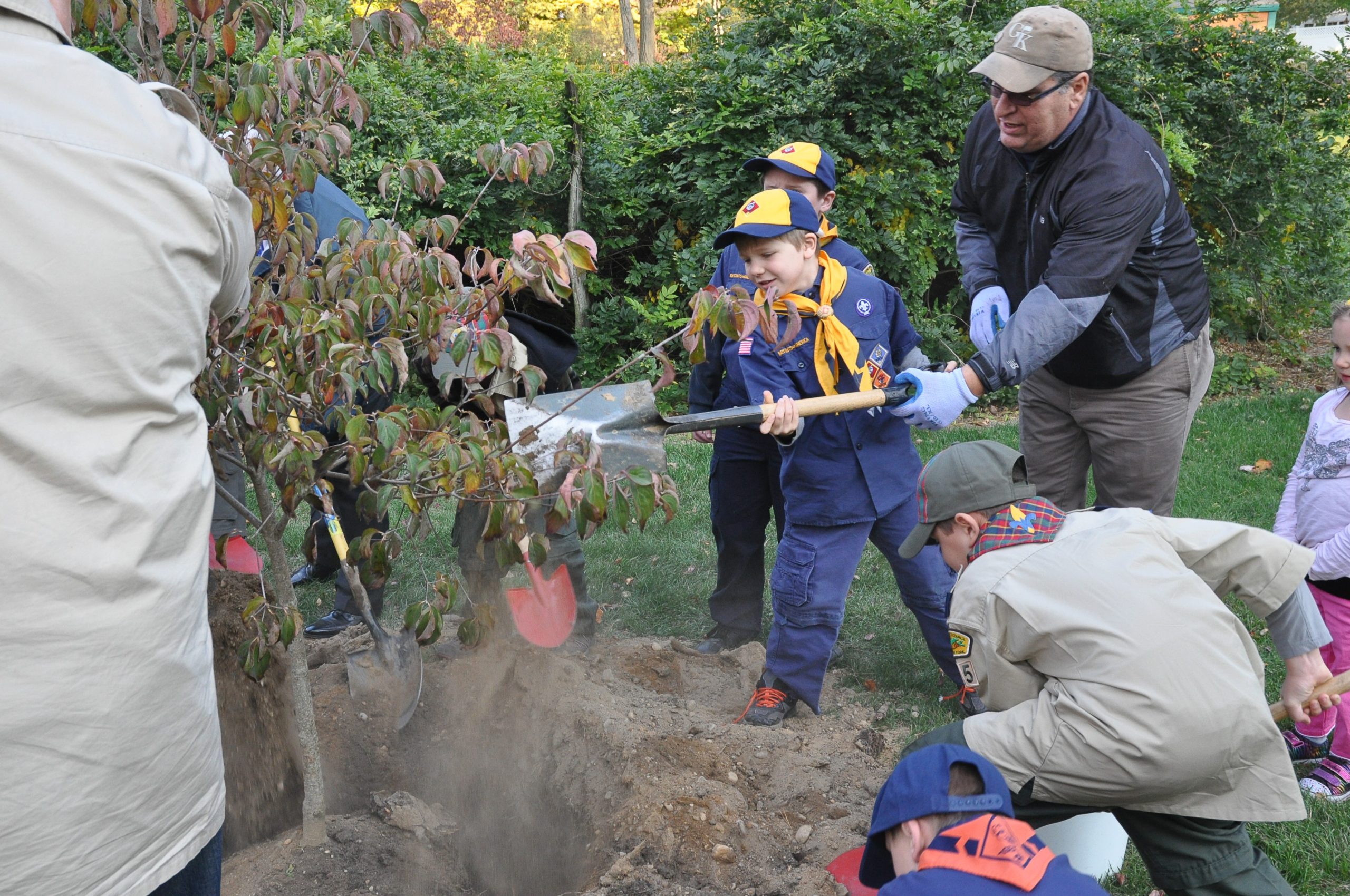
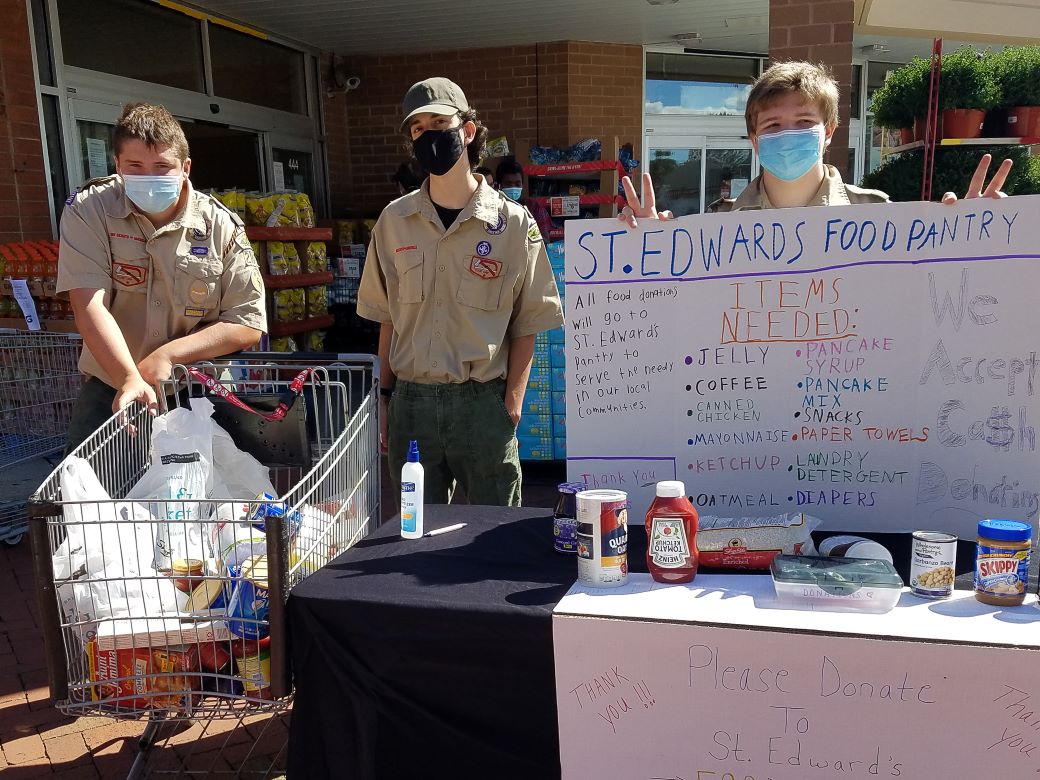
People notice the Eagle Projects. While they are perhaps the most personal imprints a Scout might make, I will say they are but icing on the cake; a final hurrah in a decade-long journey. By the time a kid does his own project, they’ve participated in MANY service projects. Even more, they’ve taught, they’ve led, they’ve planned and they’ve tested, all while learning the value of being a mindful follower.

An Eagle Scout candidate has deeply considered what it means to care for self and family, as well as how to be a good citizen in their community, their nation, internationally and in society as a whole. They understand a bit of how local government works, and have been led to really think about the Constitution and its Bill of Rights. They’ve had basic, fundamental human values drilled into their heads weekly, and been engaged in regular interviews where they’re asked what these values mean and how they apply them in their daily lives.

The basic mandate is a golden one: They are to “Do a Good Turn Daily.”

Eagle Scouts have earned a great deal of merit badges, learning to care for self and others, exploring many potential careers and hobbies, and developing deep practical skills. They’ve actively shaped their own experience as well as that of those who lead and follow them. They’ve fed people, guided them on long journeys, learned to safely wield both fire and an axe, and prepared in case of emergency.

At our last Eagle Court of Honor, another Scoutmaster told about how his own child – not very old at all – was the cool head at the scene of a horrific motorcycle accident. This kid knew just what to do, because he was a Scout.

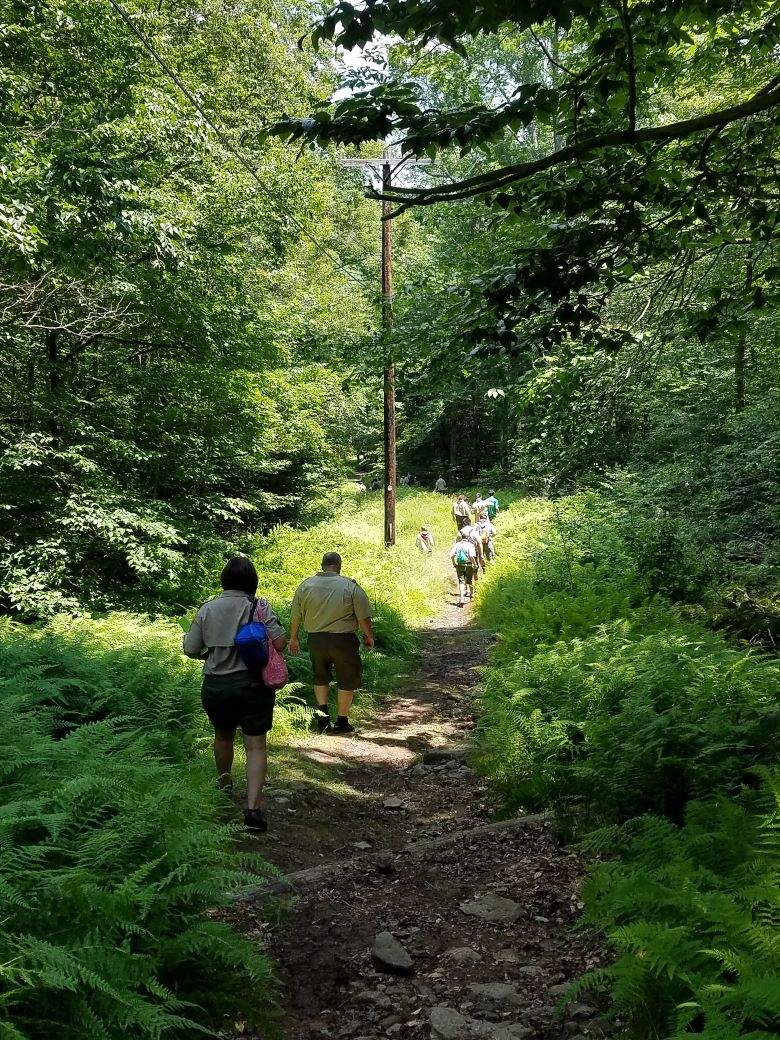
It’s training for big things, and basic preparation. I came in once to find Max teaching himself to knot a tie via his Scoutbook. This is not the only time I saw him pull out that tome as a general reference for life. In getting to last weekend, Max spent well over 70 nights camping, 77 hours performing public service and hiked many, many miles. He earned over 33 Merit Badges in a broad array of skills ranging from citizenship to life saving, camping to chemistry, animation to welding, physical fitness, family life, personal management…

Cliche as it may be, he can’t seem go anywhere without someone asking him how to tie some kind of knot. 

He can conduct either end of a professional interview and has held increasingly responsible leadership positions for years. He worked on at least 12 Eagle projects and led more than 35 people to build his own.

…and, somehow, that’s just a little bit of it…

“On my honor I will do my best to make my training and example, my rank and my influence count strongly for better Scouting and for better citizen-ship in my Troop in my community and in my contacts with other people. To this I pledge my sacred honor.” ~Excerpt from the Eagle Oath

Eagle Projects

While an Eagle project is really just icing on the cake, it’s no lesser detail.

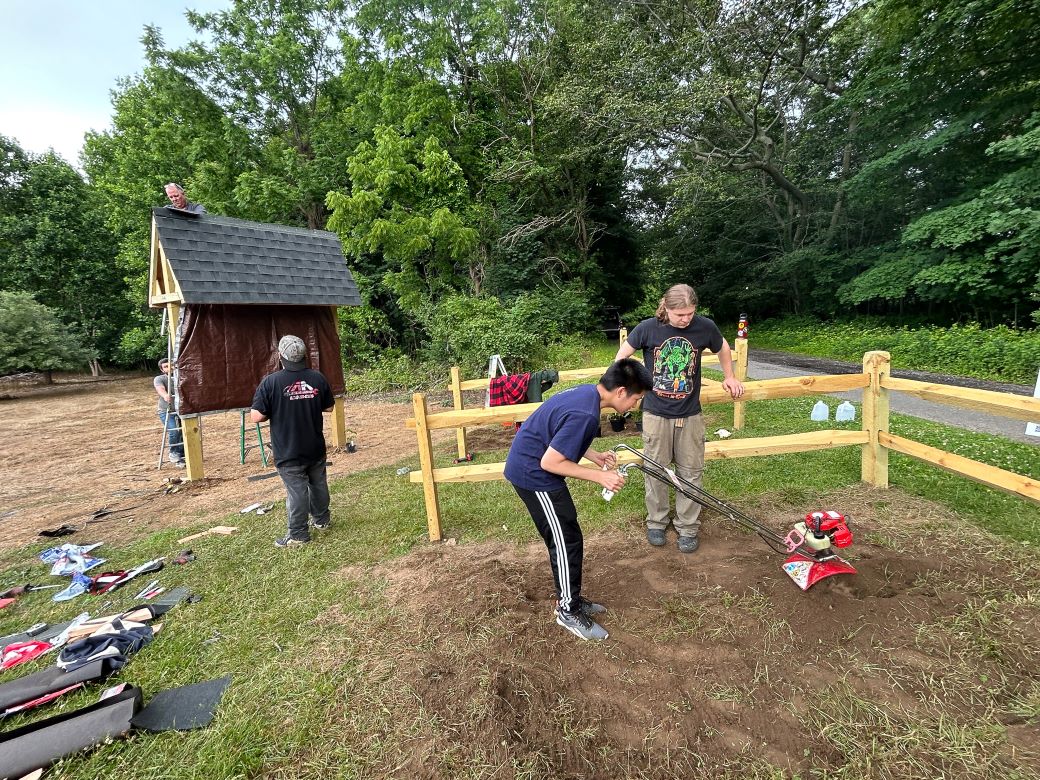
Eagle Projects must be identified, permitted, coordinated and constructed, ideally with the scout himself leading rather than doing as many aspects as possible. They have to create detailed plans (such that should they fall ill the troop can do the project without them), and rally both financial and volunteer support to realize them. Then, they have to report on how it all went.

I can’t remember all the projects Max has participated in, but I know they’ve ranged from dog playgrounds for local shelters, to endeavors to serve folks with Alzheimer’s and developmental disabilities; from trail markings to improvements to the church that hosts us. In his last year alone Max assisted:

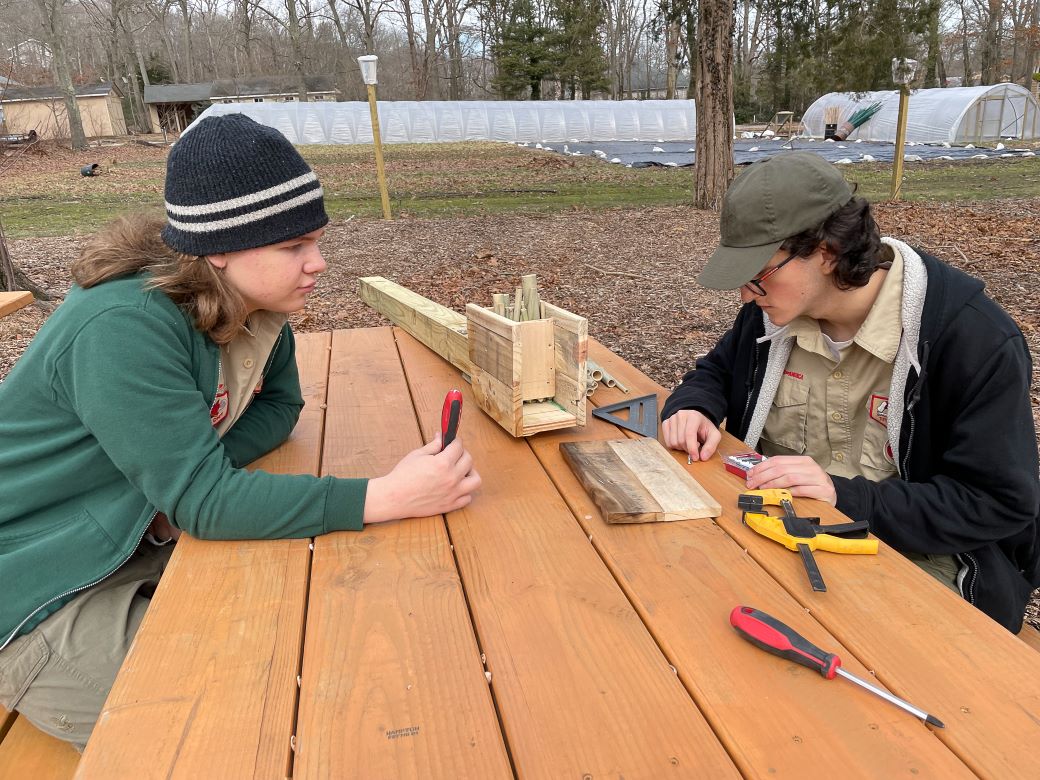
Christian Arroyo in developing really cool bee hotels at Elijah Farm in Dix Hills.
Kyle Montagni in building an amazing outdoor classroom for the Cold Spring Harbor Fish Hatchery (I love that we can see this one from the road every time we drive by!)
Ashishpal DeWal in transforming an aging Eagle Project greenhouse into a beautiful new butterfly sanctuary for the Cornell Cooperative Extension’s East Meadow Farm.
 
The full list of Troop 205 Eagles is thus:
2014 Matthew Duggan
2014 Tully Frain

2014 John Edward Zaino
2016 Thomas Clarke
2016 Spencer Gliner
2016 Hayden Dancy
2016 Elizar Alden Aspiras
2018 Jack Mok
2018 Vincent Eng
2018 Marc Huo
2018 Matthew Gavieta
2018 Terence Smith
2018 Andrew Aspiras
2022 Grant Dell’Anno
2022 Christian Arroyo
2023 Kyle Montagni
2023 Ashishpal DeWal
2023 Maxwell Owen Laible
 
Each had a different journey, making deep and unique contributions to the community. So did many other scouts who never made Eagle (only about 6% generally do!), but who will be influenced by their scouting experience for the rest of their lives. Max will tell you each one of them has been important to his own experience as well.
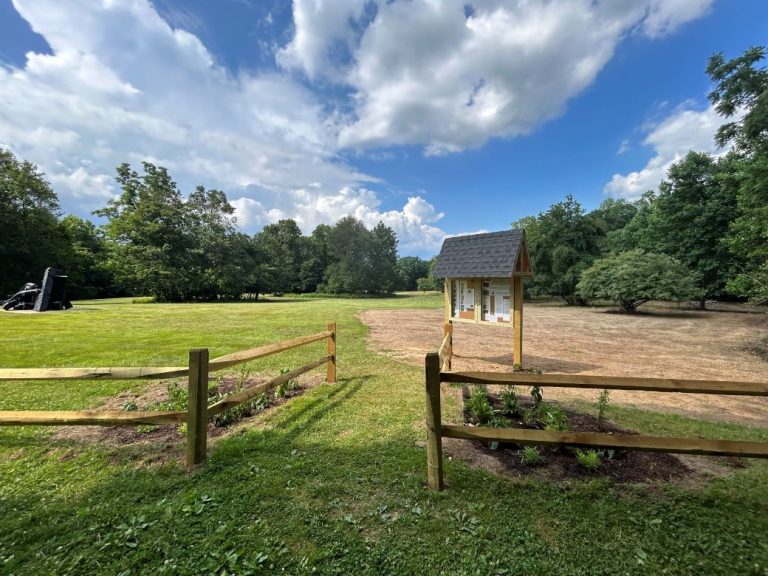
A photo of the educational kiosk, fence and garden Max led over 35 others to build at the Nassau County Museum of Art in Roslyn Harbor

Max’s Project: Building an Educational Gateway at the Nassau County Museum of Art

Max’s own project involved building a visual gateway to native grasslands now being restored at the Nassau County Museum of Art in Roslyn Harbor. We wrote a little bit about this before here and here. The final project included a split rail fence, a kiosk that serves as an outdoor education asset, and a model garden of native plants. We are delighted to report that the plants are now being maintained and expanded upon by a local garden club. 

This could not have happened without folks who cared to help. These included fellow Scouts, returning Eagles, parent leaders, friends, family, teachers, and great neighbors. Some offered guidance. Others, financial support. Some lent tools and gave materials. Many rolled up their sleeves and showed up to get the final job done. In particular, we offer grateful thanks to:

Michael Borra
Sofia Calle
Kenneth Cao
The Ceron Family
Amy Cincotta
The Clarke Family
Greg Dancy
The DeWal Family
Jim Darcy
Matthew Duggan
The Gliner Family
Angelo Guardado
Jean Henning
Danielle Kaplan
The Laible Family
Gail Lamberta
Jennifer Lau

The Lim Family
Katrina Ludwikowski
The Ma Family
The Montagni Family
Craig Mooers
Drigo Morin
Rob Nock
Northport Native Garden Initiative
Gavin Ng
Jamie Pedicini
Adrianna Peres-DaSilva
Riverhead Building Supply
Lizette Sanlés
The Shum Family
Justin Tian
Brian Zaino
Lawrence Zeltzer

There were so many more who contributed to this journey, and comprise a village Max will value for as long as he lives. In his program, Max wrote this: 

“I am more than thankful for the many years of guidance, care, patience, and humor volunteered by the adult and youth leaders in the troop. I am honored to follow, lead, teach and learn from each and every one of them. I am immensely grateful to all who were there for me during my arduous journey. They made every minute worth the experience.  ~ Yours in Scouting, Max”

We are grateful. Thanks.

2024 Smart Growth Awards

Smart Growth Awards Logo

For over 20 years Vision Long Island has been honoring individuals, organizations, and projects that advance the growth of our downtowns and infrastructure. Specific focus areas include transit oriented development, affordable housing, environmental sustainability, traffic calming, transportation enhancements, clean energy and community based planning.

Continue reading

Rising Eagle: Please Join Max in Serving the Nassau Museum of Art

Photo of Max Laible at the Nassau Museum with one of his favorite sculptures.

An Eagle Project is one last adventure in a decade-long journey. Max, here, is leading creation of a fence, educational kiosk and model native plant garden that will serve as an enriching gateway to newly restored grasslands at the Nassau County Museum of Art.

Continue reading

Native Garden and Ecolandscaping Resources

Bee on Aster by Katheryn Laible

Recently Updated! A few years ago now, I started reaching out to friends and collecting resources that we are pleased to share with you!

Continue reading

Vision Update: Complete Streets Summit, LI Lobby Coalition, Smart Growth Awards

logo Vision Long Island

A report from Vision Long Island on the LI Lobby Coalition and a preview of the Complete Streets Summit. Save the date for the Smart Growth Awards now!

Continue reading

A Few Good Places to Give

Long Island needs more people to give to local organizations addressing our local challenges. Here are just a few to consider:

Continue reading