

Here are the links to the other parts of The Fair Media Council’s “Saturated but Starving:” – Part II – Before they Scroll, Part III – Truth Under Siege and Thank you, Jaci Clement for allowing us to share your smart, savvy thoughts on the media known as “The Latest” to those who follow her through The Fair Media Council. We strongly recommend subscribing directly through www.fairmediacouncil.org. and otherwise taking advantage of the valuable – and increasingly critical – resources the FMC makes it their business to provide.
Used by the Media
If you don’t know how to use media, the media will use you.
That’s not theory. It’s reality.
Media is no longer something we watch or read. It surrounds us, speaks to us, tracks us, and prompts us—every single day. It doesn’t ask for permission. It doesn’t wait for a quiet moment. In fact, it steals silence from you.
According to eMarketer, the average American now spends more than 12 hours a day engaging with media across platforms. Even the conservative figure—8.5 hours daily, according to Nielsen—is still more time than we spend sleeping or working.
Because media is so immersive, most people don’t even realize how much of their day it shapes—because it doesn’t feel like media anymore. It feels like you. It is you. You are the algorithm.
It’s your Apple Watch tracking your steps and heart rate and feeding that data into an ad ecosystem. It’s Alexa reading you a recipe while noting your preferences and reminding you when to reorder supplies. It curates your playlists, suggests your next book, and reroutes your commute.
Still think media has no hold over you?
Somewhere along the way, the rules of media changed. But no announcement was made. America has been slow to respond.
Now, we’re seeing the consequences in our workforce.
We’ve built a society of users who are comfortable with technology—but not equipped to understand it. We know how to swipe, post, and stream—but we don’t understand how digital systems influence what we see, how we think, or the decisions we make.
That's not just a media issue -- it's an economic one.
In 2023, nearly 70% of U.S. employers reported a critical digital skills gap in their workforce, citing a growing disconnect between the capabilities they need and what employees actually bring to the table. Meanwhile, American students are lagging behind their international peers. According to the International Computer and Information Literacy Study, U.S. eighth graders scored below the global average in computational thinking—basic digital problem-solving and logic skills necessary for any modern job.
This isn’t just about tech companies. It affects healthcare, logistics, finance, manufacturing, education—every industry that now runs on data and digital infrastructure.
We’re living in a media-driven world, yet we still treat media literacy as if it’s an elective. That’s a major mistake.
Media literacy isn’t just about spotting fake news or decoding headlines. It’s about understanding how digital systems operate—and how they shape decisions, behavior, and culture at scale. It’s the kind of literacy that affects hiring, internal communication, public reputation, and business strategy.
And that's where the most successful leaders stand apart.
They know media is no longer just messaging—it’s infrastructure.
It shapes how your employees learn, how your customers think, how your brand is perceived, and how your industry evolves. It’s not a communications channel—it’s the ecosystem your organization operates in.
Smart leaders don’t just delegate media. They study how it moves. They understand that if their teams aren’t media-literate, they’re vulnerable. Executives who can read algorithmic patterns anticipate trends before they emerge.
Media literacy at the leadership level is operational awareness. It's brand protection. It's competitive advantage.
Media isn’t slowing down, and it certainly isn’t simplifying. It waits for no one. Which leaves us with only two options: We can learn how to use media or allow it to use us.

– Jaci Clement
CEO & Executive Director
photo by Bob Giglione provided by FMC
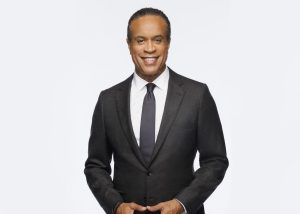
Photo of Maurice DuBois provided by The Fair Media Council. Photo Credit: Michele Crowe, CBS News
Announcing FMC’s Folio Awards 2025 Lifetime Achievement Honoree: Maurice DuBois
The Fair Media Council is proud to announce that Maurice DuBois, co-anchor of the CBS Evening News and one of the most trusted names in news, will receive our 2025 Lifetime Achievement Award—our highest honor—at this year’s Folio Awards, held June 12 at the Garden City Hotel.
A Long Island native with nearly four decades in the news industry, DuBois has reported from the world stage to our local streets, shaping how news is delivered with clarity, credibility, and heart.
“Maurice DuBois exemplifies what journalism should be—trusted, thoughtful, and in service to the public,” said Fair Media Council CEO Jaci Clement. “It’s a privilege to welcome him home to Long Island.”
Folio Awards, June 12
11 a.m. – 2 p.m.
The Folio Awards, presented by the Fair Media Council, are the gold standard for the modern media landscape, recognizing news and media that informs, enlightens, and strengthens communities.
Tickets and tables now available. A few advertising opportunities remain!
Reservations must be made in advance. No walk-ins.
Become a member of FMC
Since 1979, we’ve worked to hold media accountable and serve the public interest by keeping communities informed and engaged with quality news. Keeping local news local, responsive and responsible to the public it serves, is our legacy.
Our work has transformed into one of today’s greatest social responsibilities: Building a trustworthy, credible media landscape and a media literate society. By addressing both sides of the coin — media accountability and media literacy — we move everyone forward, together. We call it media savvy.
Our programs focus on cutting-edge media relations infused with media literacy and provide a platform to allow organizations to establish relationships with the best in news and media.
FMC is the authority on the modern media landscape. We invite organizations that value corporate social responsibility, education, community engagement and digital wellness to join us.
Fair Media Council Membership Options for Businesses & Nonprofits
Online Resources
The Fair Media Council’s Modern Media Publicity Kit is now live on our website. This comprehensive resource is designed to help you craft powerful media pitches, build strong relationships with journalists, and amplify your message across platforms.
FMC Members also have access to our online Media Guide & Directory, which is designed to be used in conjunction with the Modern Media Publicity Kit.
In addition, be sure to check out our Guide to Building Media Savvy, and our newly added News: A User’s Manual for Media Literacy & Accountability.
You’ll find this information under the Resources tab on our website.
Donate to FMC
Please remember the Fair Media Council in your charitable giving.FMC is a 501(c)(3) nonprofit organization.
Get Our Guide to Outsmart Misinformation
“How to Outsmart Misinformation in the Age of AI and Deepfakes: 12 Easy Tips to Update Methods that No Longer Work,” made its debut on Amazon the week this article was originally published in FMC’s newsletter and quickly became a No. 1 best seller.
Republished with permission from The Fair Media Council, 223 Wall Street, Suite 200, Huntington, NY 11743
